
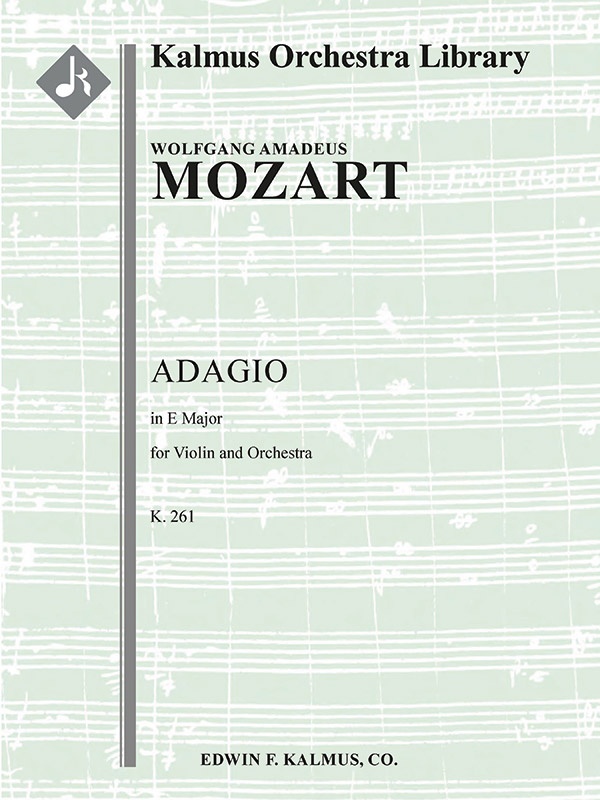
It is widely believed that Wolfgang Amadeus Mozart (1756-1791) wrote the Adagio in E major, K. 261 in or around 1776 as a replacement for the second movement of his Violin Concerto No. 5 in A, K. 219. The likely reason for the replacement is a complaint by Italian violinist Antonio Brunetti, recently brought to the Salzburg court orchestra by the Prince-Archbishop of Salzburg, Heironymus Colloredo, that the original movements was "too artificial," according to a letter from Leopold Mozart. The Mozarts, finding Brunetti boorish and morally objectionable, also would have thought his complaint regarding the "artificial" second movement to confirm their worst opinions of Italian taste. Still, young Mozart wrote the replacement Adagio as requested, and its serene beauty in sonata form remains a fine example of his lyrical ability. Instrumentation: 2.0.0.0: 2.0.0.0: Str (4-4-3-3-3 in set): Solo Violin in set.
This product is sold brand new. A manufacturer warranty applies only when the manufacturer provides one for this item.
Return requests must be submitted within 14 days of delivery and approved by our RMA department before the item is shipped back. Non-defective returns may be subject to a minimum 25% restocking fee and return shipping charges. Unauthorized returns are not eligible for credit or refund. Read the full return policy.
This product is sold brand new. A manufacturer warranty applies only when the manufacturer provides one for this item.
Return requests must be submitted within 14 days of delivery and approved by our RMA department before the item is shipped back. Non-defective returns may be subject to a minimum 25% restocking fee and return shipping charges. Unauthorized returns are not eligible for credit or refund. Read the full return policy.