
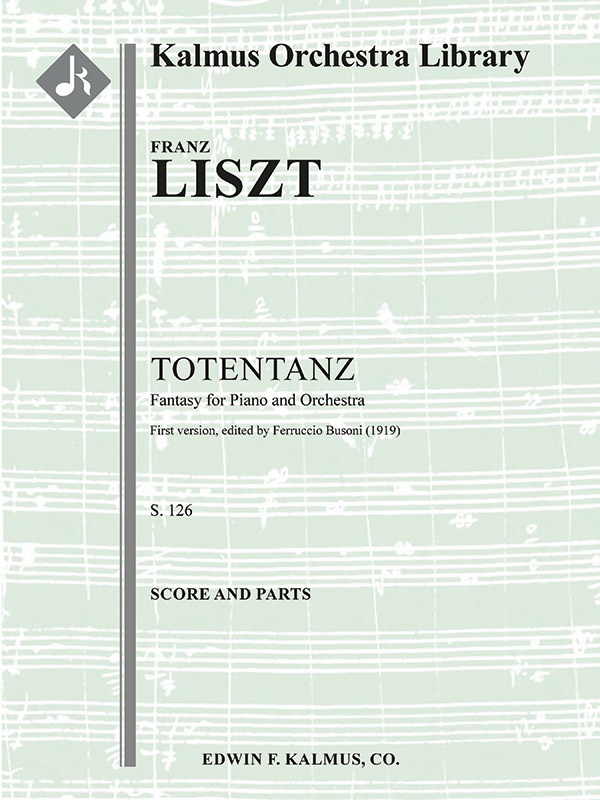
The idea for Totentanz, S. 126 (Dance of the Dead) was conceived by Franz Liszt (1811-1886) in 1838. Two versions were to follow, the first completed in 1853, and the second version finished in 1864. The flashy virtuosic piece for the solo piano uses the Gregorian plainchant melody Dies irae (Day of Judgement) in a set of variations. The first version, which is nicknamed "De Profundis," is most commonly heard in the 1919 edition by famed Italian composer, pianist, and conductor Ferruccio Busoni (1866-1924). Instrumentation: 3(3rd dPicc).2.2.2: 2.2.3.1: Timp.Perc(2-3): Str (9-8-7-6-5 in set): Solo Piano in the sc. The second (final) version is also available from the publisher.
This product is sold brand new. A manufacturer warranty applies only when the manufacturer provides one for this item.
Return requests must be submitted within 14 days of delivery and approved by our RMA department before the item is shipped back. Non-defective returns may be subject to a minimum 25% restocking fee and return shipping charges. Unauthorized returns are not eligible for credit or refund. Read the full return policy.
This product is sold brand new. A manufacturer warranty applies only when the manufacturer provides one for this item.
Return requests must be submitted within 14 days of delivery and approved by our RMA department before the item is shipped back. Non-defective returns may be subject to a minimum 25% restocking fee and return shipping charges. Unauthorized returns are not eligible for credit or refund. Read the full return policy.